SaaS (Software as a Service) is a cloud-based software delivery model where applications are accessed via the internet instead of being installed on individual devices. This guide explains what SaaS is, its benefits, differences from other cloud models, examples, business use cases, and why it matters in 2025. Ideal for students, entrepreneurs, and tech professionals.
In today’s digital-first world, the way we use software has radically transformed. Gone are the days of bulky installations, endless updates, and high upfront costs. Instead, we now access powerful software tools directly from the cloud — anytime, anywhere.
This revolutionary shift is called SaaS — Software as a Service.
Whether you use Google Docs, Zoom, or Netflix, you’re already a SaaS user. But what exactly is SaaS, how does it work, and why is it dominating modern business models in 2025?
What is SaaS?
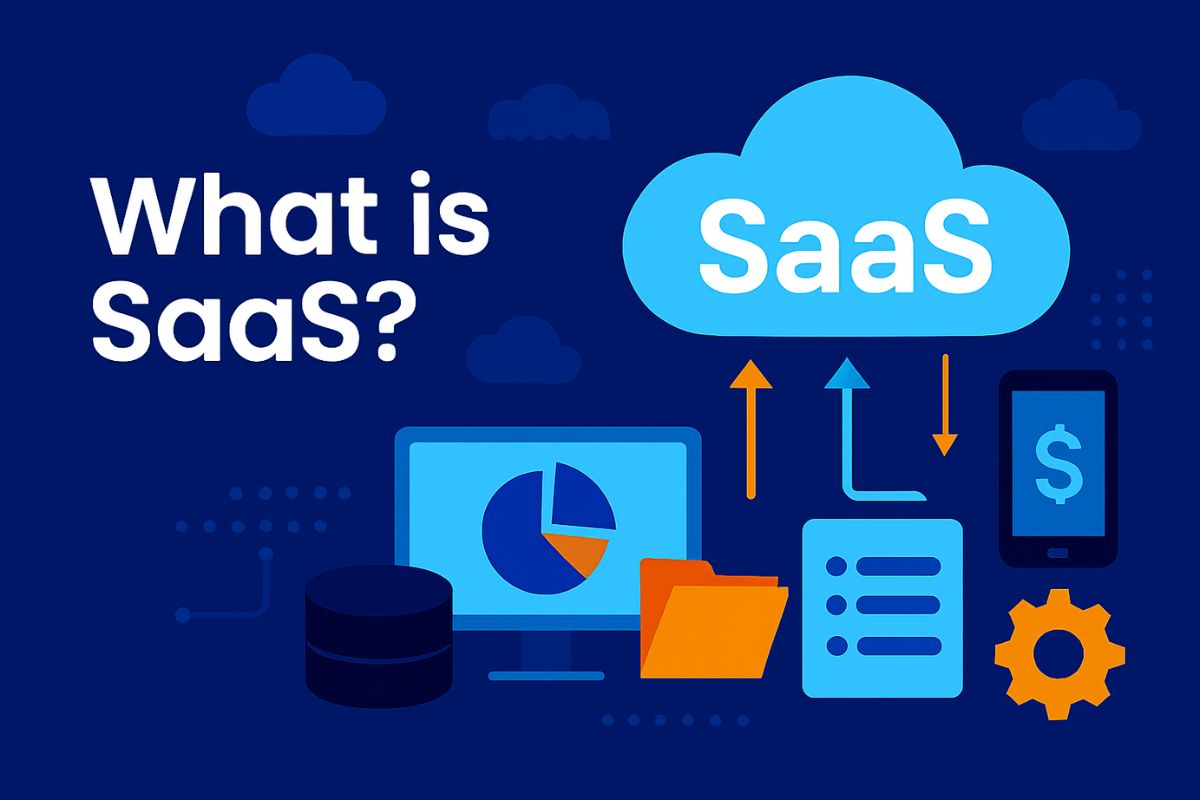
Software as a Service (SaaS) is a cloud computing model where software applications are delivered over the internet, usually via a subscription model. Users don’t need to download, install, or manage the software — everything is hosted by the service provider on their servers.
SaaS = Software you can use in your browser without installing it.
How SaaS Works
- Hosted on cloud servers (AWS, Azure, etc.)
- Delivered via web browser or app
- Regularly updated and maintained by the provider
- Users pay monthly/yearly subscription fees
- Scalable and accessible from any device
Key Features of SaaS
| Feature | Description |
|---|---|
| Web-Based Access | No installation; just login via browser |
| Subscription Model | Pay-as-you-go pricing (monthly/yearly) |
| Automatic Updates | No manual patching or upgrades |
| Scalability | Easily upgrade/downgrade plans |
| Accessibility | Use from any device with internet |
| Multi-Tenant Architecture | Single software instance serves multiple users securely |
Benefits of SaaS (for Users & Businesses)
| Benefit | Description |
|---|---|
| Cost-Effective | No upfront hardware/software investment |
| Faster Setup | Ready-to-use; no long installation |
| Automatic Updates | Always up to date with the latest features |
| Data Security | Advanced cloud security and backups |
| Scalable | Easily scale with business growth |
| Remote Access | Use from anywhere — ideal for remote teams |
| Collaboration-Friendly | Real-time data sharing & access (e.g., Google Docs) |
Popular SaaS Examples in 2025
| Category | Example | Use Case |
|---|---|---|
| Communication | Zoom, Slack | Video meetings, team chat |
| Productivity | Google Workspace, Microsoft 365 | Docs, Sheets, Email |
| CRM | Salesforce, HubSpot | Customer relationship management |
| E-commerce | Shopify | Online store creation |
| Project Management | Trello, Asana, ClickUp | Task & project tracking |
| Marketing | Mailchimp, SEMrush | Email marketing, SEO tools |
| Education | Coursera, Udemy | Online learning platforms |
SaaS vs Traditional Software vs Other Cloud Models
SaaS vs On-Premise Software
| SaaS | On-Premise |
|---|---|
| Cloud-hosted | Locally installed |
| Monthly/Yearly fee | One-time license |
| Accessible online | Access limited to device |
| Automatic updates | Manual updates required |
SaaS vs PaaS vs IaaS
| Model | Full Form | Function |
|---|---|---|
| SaaS | Software as a Service | Ready-to-use software apps |
| PaaS | Platform as a Service | Tools for developers to build apps |
| IaaS | Infrastructure as a Service | Servers, networking, storage via cloud |
SaaS Business Model Explained
SaaS is not just a tech innovation — it’s a booming business model used by startups and tech giants alike.
Key Components
- Subscription-based Pricing (monthly/annually)
- Freemium Models (free basic plan + premium upgrades)
- Customer Retention & Churn Rate Metrics
- Recurring Revenue (MRR/ARR)
SaaS Metrics to Track
| Metric | Meaning |
|---|---|
| MRR | Monthly Recurring Revenue |
| ARR | Annual Recurring Revenue |
| CAC | Customer Acquisition Cost |
| LTV | Lifetime Value of a Customer |
| Churn Rate | Percentage of customers lost monthly/yearly |
Common Challenges of SaaS
| Challenge | Solution |
|---|---|
| Data Privacy Concerns | Use GDPR-compliant services |
| Internet Dependency | Ensure backup connectivity |
| Subscription Fatigue | Monitor tool usage & consolidate |
| Security Risks | Choose SaaS providers with strong encryption |
| Limited Customization | Choose modular SaaS platforms |
SaaS Use Cases Across Industries
| Industry | SaaS Examples |
|---|---|
| Education | Google Classroom, Zoom, Byju’s |
| Healthcare | Practo, Zocdoc, Kareo |
| Finance | QuickBooks, FreshBooks |
| Marketing | Hootsuite, Buffer, Canva |
| E-commerce | Shopify, BigCommerce |
| Recruitment | Zoho Recruit, LinkedIn Talent Solutions |
Why SaaS Matters in 2025
- Remote work and online education have accelerated SaaS adoption
- India’s startup ecosystem relies heavily on SaaS to scale fast
- Growing demand for low-code/no-code platforms via SaaS
- SaaS enables digital transformation for small businesses
India is becoming a SaaS powerhouse, with homegrown players like Zoho, Freshworks, and Chargebee going global.
Career Opportunities in SaaS
In-Demand Roles:
| Role | Description |
|---|---|
| SaaS Product Manager | Oversees strategy and development |
| SaaS Sales Executive | Handles B2B sales cycles |
| Customer Success Manager | Retains and supports users |
| Growth Marketer | Drives user acquisition and retention |
| SaaS Developer | Builds and maintains cloud apps |
Free Tools & Learning Platforms for SaaS
| Platform | What It Offers |
|---|---|
| HubSpot Academy | Free CRM & SaaS sales courses |
| Coursera | SaaS product management certifications |
| LinkedIn Learning | SaaS marketing, growth, UX tutorials |
| Google Cloud Skills Boost | Cloud + SaaS development tracks |
| YouTube (SaaS Mastermind) | Tutorials, tools, startup insights |
Expert Tips for SaaS Users & Founders
For Users:
- Audit your subscriptions every 6 months
- Use free tiers before upgrading
- Check privacy & data policies before sharing data
For Founders:
- Focus on solving one big pain point
- Prioritize UI/UX — it’s everything in SaaS
- Keep CAC low, LTV high
- Offer 14-30 day free trials with onboarding tips
- Measure and act on churn metrics
Conclusion
SaaS is not just the future — it’s the present.
From simplifying how we work, learn, and collaborate, to helping startups build scalable products — Software as a Service is transforming the digital landscape.
Whether you’re a student curious about tech, an entrepreneur launching your startup, or a professional exploring smarter tools, understanding SaaS is essential in 2025.
The best part? You’re probably already using it. Now, you can use it smarter.
FAQs
1. What is SaaS in simple words?
SaaS is software you use online without installing it on your computer — like Google Docs or Zoom.
2. What are some examples of SaaS?
Popular SaaS tools include Gmail, Slack, Shopify, Zoom, Trello, and Netflix.
3. How is SaaS different from traditional software?
SaaS is cloud-based, subscription-driven, and accessed online, while traditional software is installed on a local device.
4. Is SaaS secure?
Yes, most SaaS providers use encryption and data protection protocols. Always choose reputable providers.
5. Can I start a career in SaaS?
Absolutely! Roles in product management, marketing, sales, customer success, and development are in high demand.
6. What are the disadvantages of SaaS?
Internet dependency, subscription fatigue, and limited customization are a few challenges, but manageable with planning.
7. Is SaaS suitable for small businesses?
Yes! SaaS offers affordable, scalable, and easy-to-use solutions for startups and SMBs.